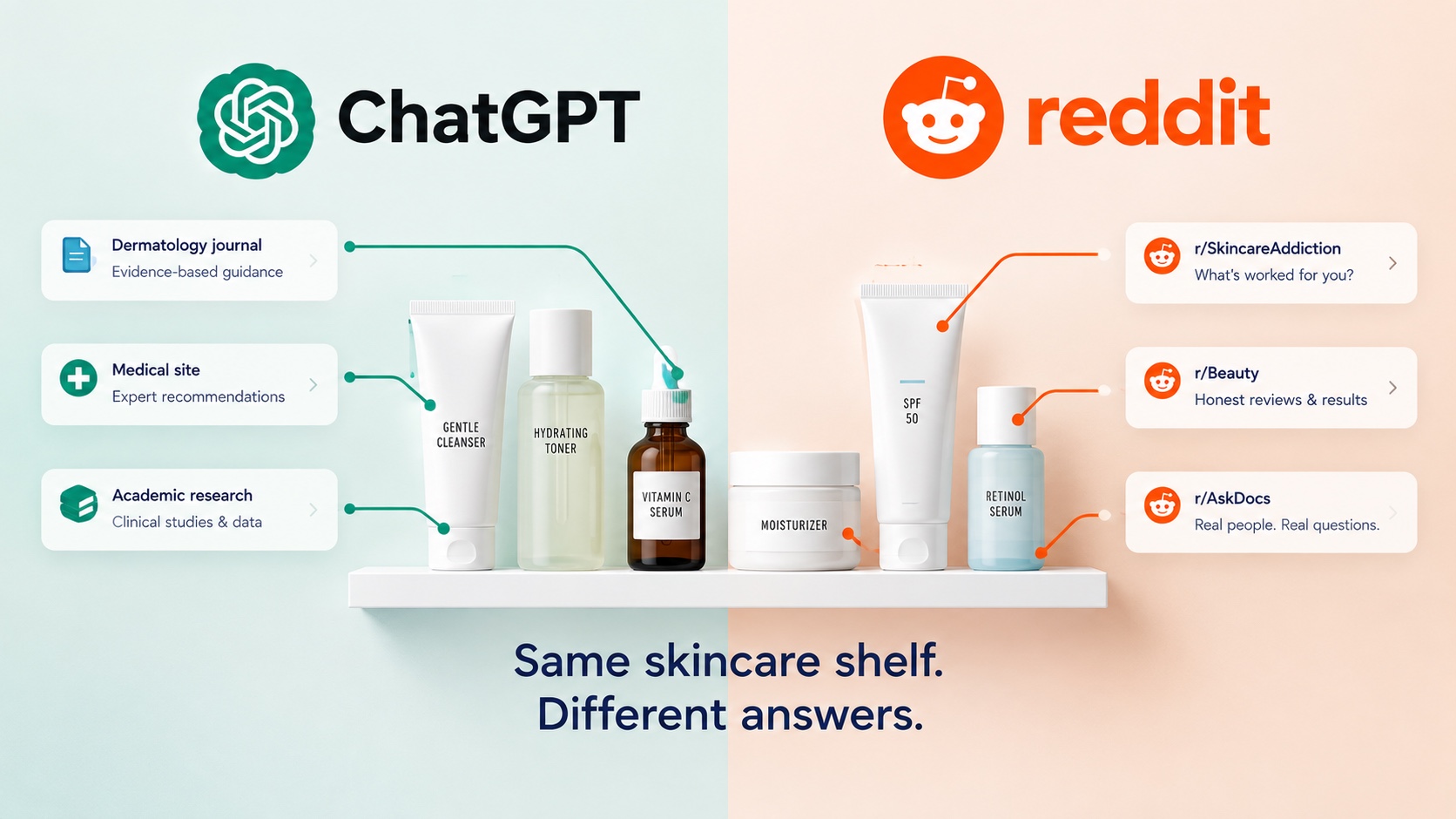
I asked ChatGPT fifty skincare questions on September 2nd. Reddit came up zero times. As recently as May it had been the most cited source in the category, ahead of Sephora and Allure.
That part is not the story. Reddit's collapse in ChatGPT was measured and argued over through late August, and by now the people who over-indexed on it have taken their beating. What nobody had said is what took its place.
It is not one thing. Ask how a product feels on your skin and ChatGPT cites Allure. Ask whether an ingredient actually works and it goes to PubMed. Ask about acne and it cites the American Academy of Dermatology, exclusively, every single run. Ask what is safe to use in pregnancy and it stops recommending products altogether and points you at your doctor.
The source changes with the question. Which means being cited by AI is not one job. It is four, and most brands are working on one.
The collapse itself was Klaas Foppen's finding. Reddit held 3.83% of ChatGPT's citations through early August, then 0.52% by the 14th. Two days after publishing the numbers he published the cause: on August 8 ChatGPT started asking named websites directly, on top of its usual search. Discussion platforms are rarely the target of that kind of query. Official sites, documentation and institutional domains are. Google's AI surfaces lost Reddit citations far more slowly over the same weeks, which is what makes it a change in one product rather than a verdict on Reddit.
So the category was already named. What I wanted was the level below it: which institutions, and whether a brand gets the same set every time.
Reddit was not the only thing missing. Novi's analysis of 10.7 million ChatGPT citations, running from January 22nd to May 20th this year, put the top five sources for skincare questions as Reddit, Who What Wear, Sephora.com, Allure and Ulta.com.
Four of those five never appeared in my fifty answers as a cited source. Who What Wear twice, Sephora.com and Ulta.com not once. Only Allure held up, at fourteen.
Sephora and Ulta were all over the results, just not as evidence. They appeared constantly as the merchant selling the product. They had stopped being the reason to buy it.
The shopping shelf did not move
Tom Wells, then a researcher at Peec AI, analyzed 1.1 million shopping query fan-outs against Google's organic results and found 83% of ChatGPT's carousel products in the top 40, and 60% in the top 10. I ran ten queries and measured 81% and 57%. Close enough to call it a replication rather than a challenge, which is the main reason to trust anything else here.
His measurements came before any of this. Mine came after. The sequence is tight: GPT-5.6 replaced GPT-5.5 Instant inside ChatGPT on August 6th, Foppen measured the search-behavior change on the 8th, and Reddit's citations went over the cliff on the 14th. I am not going to claim the model release caused the retrieval change. He measured the middle step, I did not.
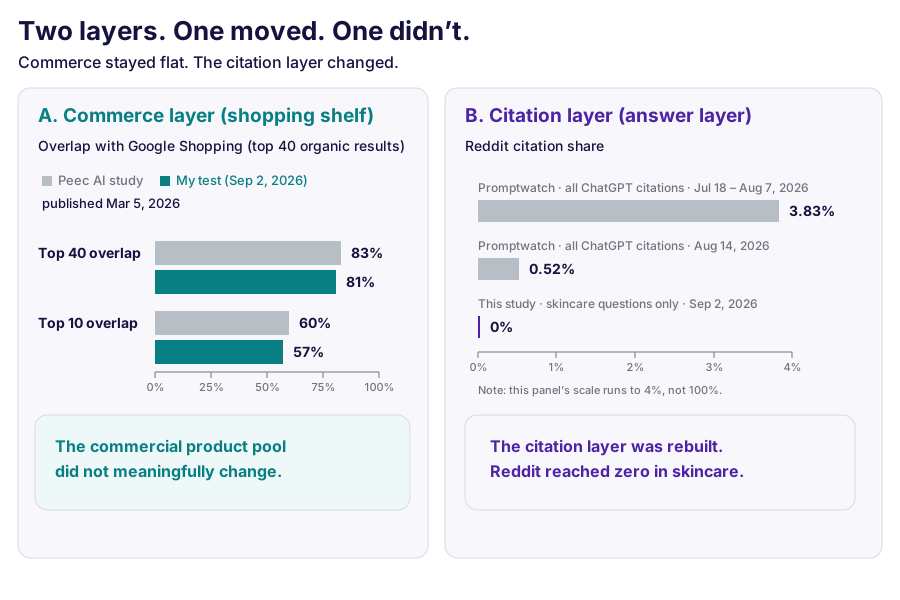
So the pool of products barely shifted while the sources feeding the answers were rebuilt. Two systems, doing two different jobs, on different clocks.
The four lanes, in detail
Novi had already shown ChatGPT's source mix varies by category, with skincare and fragrance pulling from different places. Inside skincare it changes again, question by question.
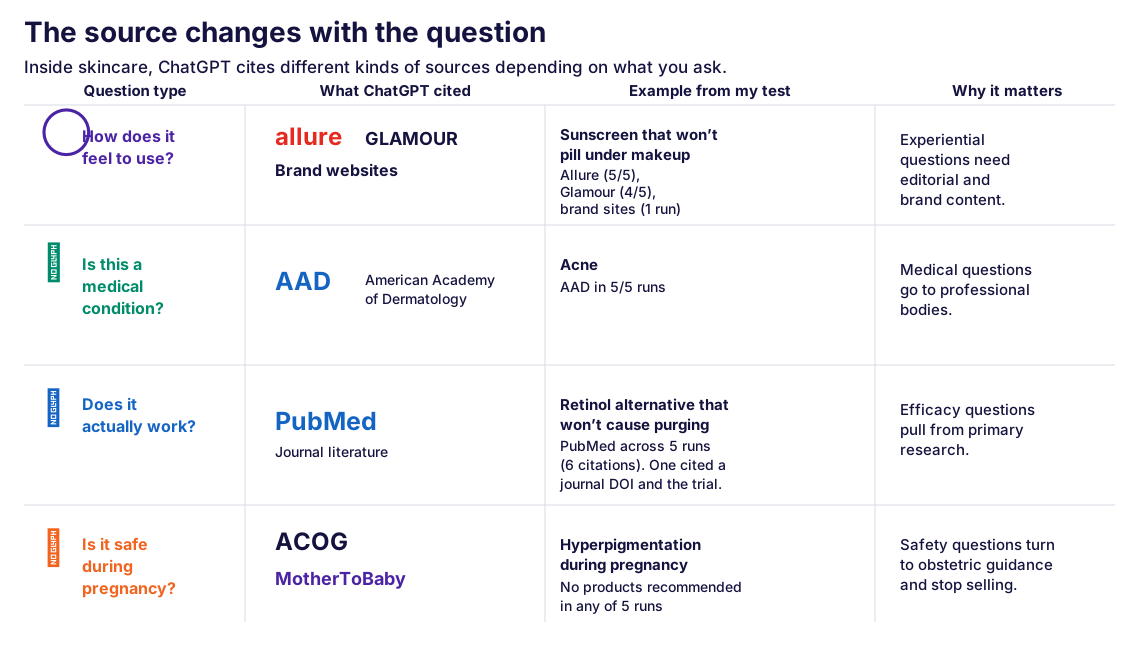
I asked about acne. All five runs cited the American Academy of Dermatology and nothing else.
I asked for a sunscreen that would not pill under makeup. No medical source appeared at all. Allure showed up in five runs of five and Glamour in four, and one answer sourced four separate recommendations to the manufacturers' own websites, because for a claim like that the manufacturer is often the only organization that has published anything.
I asked for a retinol alternative that would not cause purging. PubMed appeared six times, and one answer cited a journal DOI and worked from the trial itself.
Cleveland Clinic sat underneath a lot of it. Eleven citations across the moisturizer, vitamin C and retinol questions, and not one on the pilling question. Hospital content is doing quiet work in the ingredient and efficacy lanes and none at all in the experiential one.
Which makes the usual advice to diversify your sources incomplete. The useful version is narrower: know which kind of source answers the questions people actually ask about your product. Clinical research will not help you with how something feels under makeup, because nobody runs trials on that. A beauty magazine will not settle whether an ingredient works.
Ranked 15th on Google, recommended by ChatGPT every time
Ask for the best face sunscreen for daily use and ChatGPT picks EltaMD UV Clear. It did in all five runs.
On Google Shopping, EltaMD is 15th. Fourteen products rank above it, including CeraVe Invisible Mineral at #1, which appeared in all five ChatGPT answers and was never the recommendation.
If you sell that CeraVe product you are in the consideration set every single time and you are never the answer. That is a different problem from being invisible, and it is an easy one to score as a win.
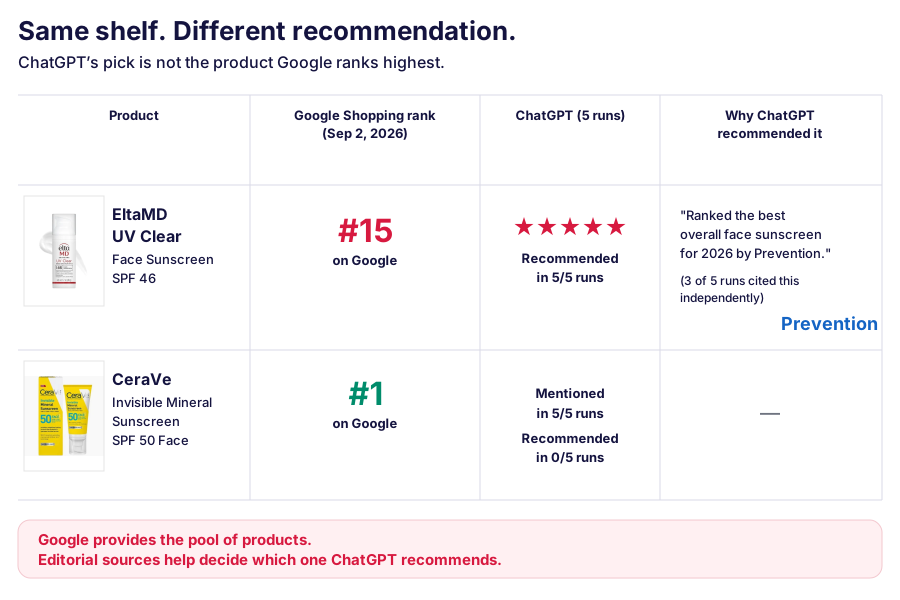
ChatGPT gave a clue about why. Three of the five runs independently offered the same explanation: Prevention had ranked it the best overall face sunscreen for 2026.
The same thing happened elsewhere. On one query the top pick was Google's #35, on another #38. Google supplies the pool. A magazine decided which one came out of it. The lever is editorial, which makes it a communications problem rather than a merchandising one.
The evidence under a recommendation
On the dry-skin moisturizer question, one run gave four sources for picking CeraVe: CeraVe's own site, La Roche-Posay's own site, Cleveland Clinic, and Nebraska Medicine. Two of the four were the sellers.
The Nebraska Medicine page is the one worth opening. It recommends ingredient classes, ceramides and humectants, and never mentions CeraVe. ChatGPT's wording was honest about that, describing the type of formula rather than claiming an endorsement, and the chip is right there to click. But the chip sits next to the product, and the chip is what persuades.
It was not a one-off. On the sunscreen question, EltaMD, Supergoop!, La Roche-Posay and Eucerin were each sourced to their own websites.
Pregnancy is where the two systems diverge most
I asked what to use for hyperpigmentation during pregnancy. ChatGPT recommended no products in any of the five runs. Google Shopping, asked the same thing, returned forty purchasable products.
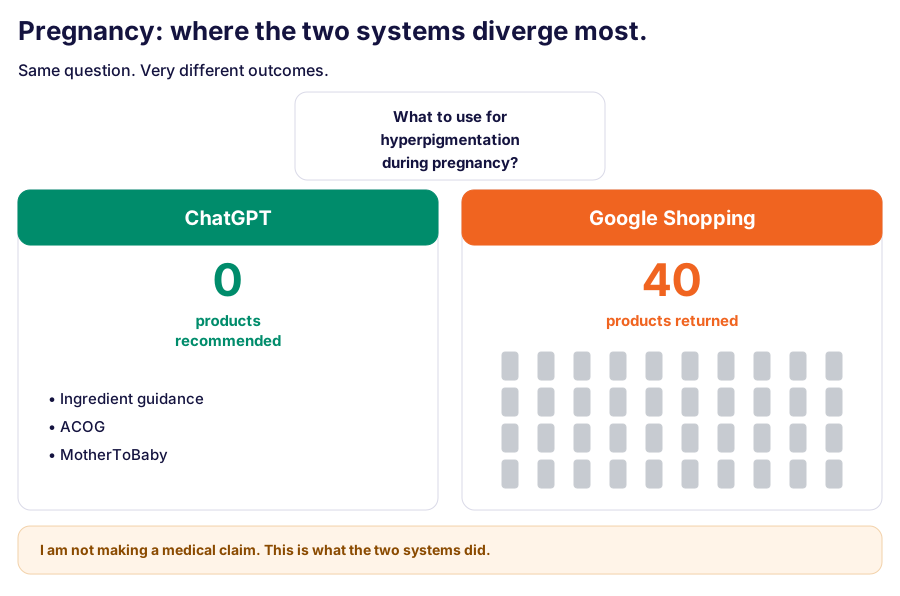
I am not making a medical claim from that comparison. I cannot tell you which products are safe during pregnancy, this test does not establish it, and a clinician should answer it.
What I can report is what the two systems did. One pointed toward obstetric guidance and stopped recommending products. The other returned a shelf.
That distinction matters for where AI shopping is heading. The system answering the question and the system putting products in front of you do not necessarily apply the same filters.
How I ran the test
Ten skincare queries, five ChatGPT runs each, September 2nd 2026, logged out on both surfaces with a fresh session every time, from the New York metro area.
Logged out is deliberate. It is what someone without an account sees, and it is the configuration anyone can reproduce exactly. Those sessions were served by GPT-5.6 Luna, which I confirmed while running them. Paid accounts get GPT-5.6 Sol instead, so this measures the shopper without an account rather than the subscriber.
For the Google comparison I used a top-40 cutoff, matching Peec's published work. That is a chosen boundary, not a property of the page: Google Shopping runs well past 200 results, and an overlap percentage without a stated denominator is not worth much.
The raw data is published in full. Ten queries is not a claim about every category or every user, but it is easy to repeat.
That is the part I would most like to see someone else run. Not whether Reddit is gone. Whether the thing that replaced it changes with the question in your category too.
The data
Everything below is what the study actually ran on. Ten ChatGPT queries, five runs each, plus the Google Shopping shelves they were compared against. The capture protocols are included so the whole thing can be repeated rather than taken on trust.
Download everything (38 KB)
The fifty ChatGPT runs
q01 moisturizer, dry skin · q02 sunscreen, daily · q03 vitamin C serum · q04 cleanser, acne · q05 retinol, beginner · q06 moisturizer, sensitive, under $30 · q07 sunscreen, oily, no pilling · q08 hyperpigmentation, pregnant · q09 affordable routine · q10 retinol alternative
The Google Shopping side
All ten shelves, 400 organic positions · full capture, q01 · full capture, q02
How to repeat it
ChatGPT capture protocol · Google Shopping capture protocol
The Google files include the corrections I made along the way, including where I first got the organic count wrong and had to retract it. Those are left in rather than tidied out.
Sources
- Klaas Foppen, Promptwatch, August 18 2026 — the citation tracking
- Klaas Foppen, Promptwatch, August 20 2026 — Why Did ChatGPT Stop Citing Reddit?, the analysis and the
site:operator data - Tom Wells, then at Peec AI, in Search Engine Land, March 5 2026 — the 83% carousel study
- Novi, June 9 2026 — 10.7M citations, 98,000 source sites, January 22 to May 20 2026
- Background, not cited above: Novi, May 14 2026 — the rise of Reddit sourcing
- OpenAI — GPT-5.6 in ChatGPT